
In this Issue
- Insights from our Executive Director
- Q3-2026 Grant Funding totals $315,000
- Head Start: Why We Spoke Up
- Grantee Spotlight: Newark Nonprofit Leadership & Resilience Fund
- From the Field: Now Hiring
Insights from Our Executive Director
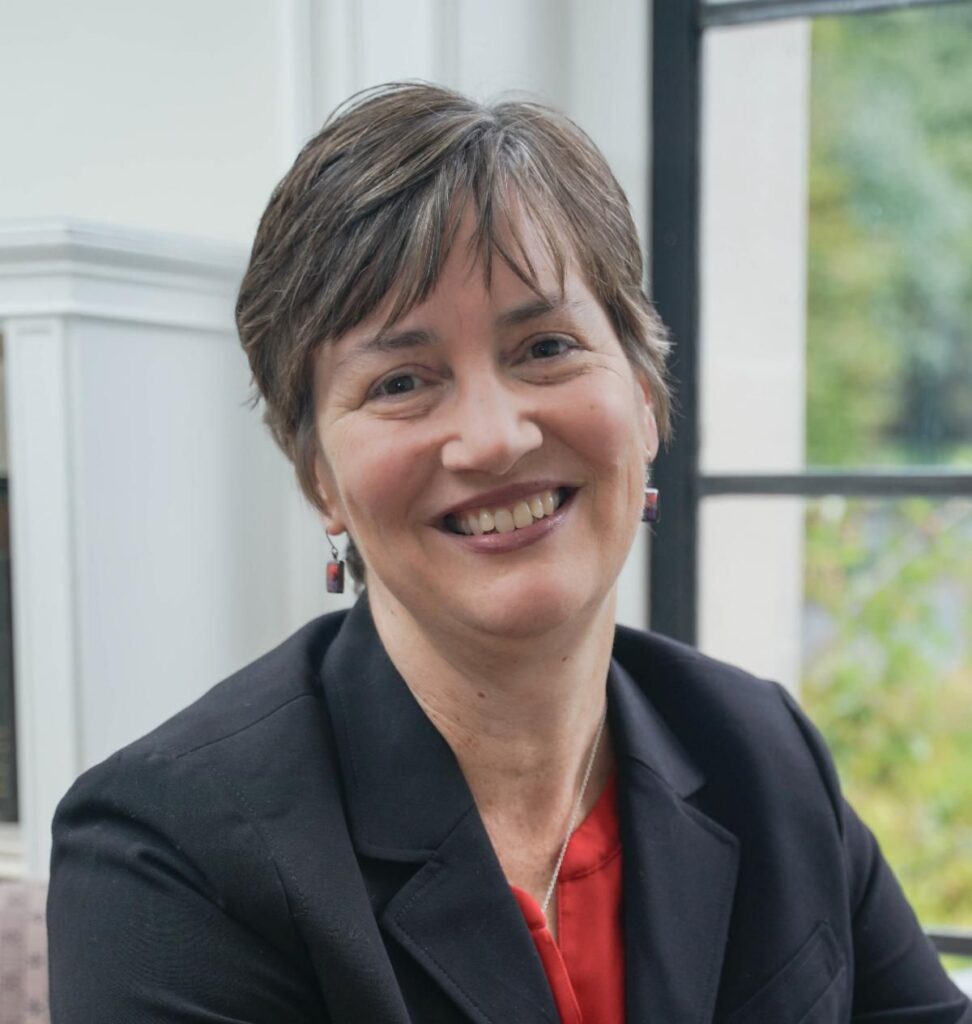
With the 2026 Election behind us and the fall season upon us, change is in the air. Schumann Fund is proud to support organizations in Essex County and throughout the state that have worked tirelessly to educate and inform our residents so they can access social safety net programs in the months ahead. We are encouraged by the large number of community organizations and individuals that have spoken up. Protecting programs such as Head Start and ensuring we have an accurate Census in 2030 in New Jersey is vital.
In this issue, Schumann Fund is proud to share the investments we made in the areas of childcare, food insecurity, and housing assistance. We highlight the work of the Newark Nonprofit Leadership & Resiliency Fund (NNLRF), a pooled fund co-created by Schumann Fund with four other funders, which operates under a shared nonprofit-philanthropic governance model to foster Newark nonprofit organizational capacity. When we adopt models that share power, we know we will achieve more equitable and durable outcomes.
We remain proud of our continued investment in the Newark Philanthropic Liaison (NPL) position. Created in 2007 alongside nine other Newark funders, Kevin Callaghan has served well in this role for the past 10 years. Through his leadership, Newark philanthropic institutions and the City of Newark have worked together strategically to leverage $85 million in new investment opportunities during his tenure. Notable achievements include the Newark Movement for Economic Equity and the Newark Guaranteed Income Pilot. Both programs established Newark as a national leader in cash policy for low-income families and provided more than 400 Newark residents with much-needed cash support immediately after the COVID pandemic. We congratulate Kevin and thank him for his partnership and leadership as well as that of the Council of New Jersey Grantmakers (CNJG). CNJG’s steadfast support of the NPL position has been critical to its success. See the NPL 2025 Report to the Field to read about 25 milestones achieved in the year 2025.
Whether through grantmaking, capacity-building or using our voice to stand up for equity and inclusion, Schumann Fund is deeply committed to partnership in Essex County and beyond. We sincerely believe that when community holds the keys, we can open doors to powerful opportunities that benefit us all.
Q3 GRANT FUNDING SURPASSES $315,000

A total of $315,000 in grant funding was approved by Schumann Fund Trustees at our quarterly board meeting in October 2026.
This round of funding supports housing stability and community power-building in Essex County and across New Jersey. It also continues our commitment to early childhood policy and organizing, and to immigrant children and their families. Nearly every award renews a relationship with a long-standing partner, and we’re glad to welcome United Community Corporation as a new grantee.
“At a time when the federal government is pulling back vital resources such as SNAP and Medicaid from our most vulnerable residents here in Essex County and across New Jersey, Schumann Fund is investing. We serve incredible non-profits that are stepping up to provide direct services, educate residents on their rights, and advocate for public sector investments in food security, healthcare, and childcare,” said Schumann Fund Executive Director Lucy Vandenberg.
Learn more about our grantees and their awards below:
Affordable Homes & Healthy Communities 
Council of New Jersey Grantmakers received a $15,000 grant – the first year of a three-year, $45,000 commitment – to support the position of Newark Philanthropic Liaison (NPL). An additional $15,000 in discretionary funding was awarded to advance the concept of a statewide philanthropic liaison. Ewing, NJ
Meeting Essential Needs with Dignity (MEND) received a $30,000 general operating grant – year two of a two-year, $60,000 commitment, for general operating support. Maplewood, NJ
NJ Citizen Action Education Fund received a $30,000 general operating grant — the first year of a two-year, $60,000 commitment, for operating support with focus on Healthcare for All Education and Outreach. Newark, NJ
United Community Corporation was awarded a $25,000 program grant to support their Housing Assistance Program. Newark, NJ
Early Childhood & Education 
NJ Association for the Education of Young Children received a $50,000 grant – year two of a two-year, $100,000 commitment for general operating support with an emphasis on public policy. Barnegat Light, NJ
NJ Communities United received a $75,000 general operating grant with a focus on New Jersey Child Care for All Campaign. Newark, NJ
Urban League of Essex County received a $40,000 general operating grant – year three of a three-year, $120,000 commitment with a focus on improving educational outcomes for low-income students in Essex County and New Jersey. Newark, NJ
Child Welfare & Youth Justice 
American Friends Service Committee – NJ Immigrant Rights Program received a $25,000 program grant to support youth immigrant rights work. Newark, NJ
Child Focus was awarded a $20,000 program grant to support the NJ Safe Babies Court Team. Wayne, NJ
First Friends of New Jersey and New York received a $25,000 rapid response general operating grant. Kearny, NJ
Latino Action Network Foundation received a $25,000 grant to support long-term organizing infrastructure. Union, NJ
New Jersey Institute for Social Justice was awarded a $40,000 general operating grant — year one of a two-year, $80,000 commitment — with an emphasis on youth justice work. Newark, NJ
Rutgers Child Advocacy Clinic of Rutgers Law School was awarded a $25,000 program grant to continue qualitative research and a policy project gathering youth perspectives on New Jersey’s child welfare system. Newark, NJ
St. Benedict’s Preparatory School received a $25,000 program grant to support the Steven M. Grossman Family Counseling Center for the 2026–2027 school year. Newark, NJ
HEAD START: Why We Spoke Up

Head Start is the first classroom for more than 12,000 New Jersey children. This fall, the federal government proposed rewriting the standards behind the program. The changes include dropping limits on child-to-staff ratios, ending required teacher coaching, and banning support for kids learning in their home language.
On October 2, we filed a public comment asking the U.S. Department of Health and Human Services to withdraw the proposal. We’re all for less paperwork. But these standards aren’t paperwork. They’re why Head Start works.
Early childhood has been at the center of the Schumann Fund’s work for decades. For many New Jersey families, early childhood starts with Head Start. The program serves more than 12,000 children in our state, including more than 1,200 experiencing homelessness and nearly 1,200 with disabilities. It still reaches only about one in five eligible preschoolers.
In August, the U.S. Department of Health and Human Services proposed a rule called “Reducing Federal Burden for Head Start Programs.” It would throw out the Head Start Program Performance Standards and replace them. On October 2, we submitted a public comment opposing it.
We agree that programs shouldn’t drown in paperwork. But this proposal goes well beyond that. Head Start’s long-term results come from program quality: children who attend are more likely to finish high school and go to college, and less likely to need special education. Take away the standards that protect quality, and you put those results at risk.
Here’s what worried us most:
- An English-only rule. Many children in the communities we serve speak Spanish or another language at home. A child who builds vocabulary in her first language carries those skills into English. Banning home-language support would hold back the very children Head Start is meant to help.
- No federal limits on group size or child-to-staff ratios. Programs could fall back on the weakest rules their state allows. HHS itself notes that Head Start’s current ratios are stronger than any state’s.
- No required coaching for teachers, one of the best-supported ways to improve classroom teaching.
- No federal limits on suspending or expelling preschoolers, which would fall hardest on children with disabilities or trauma.
- A cut in the allowable share of funds for administration from 15% to 5%, squeezing the systems that keep programs safe and accountable.
Along with thousands of others, we asked HHS to withdraw the proposal and work with Congress, states, providers, and families on reforms that cut real red tape without weakening quality. We also offered to share what we’re learning from our own early learning grants in New Jersey. As our letter put it: “These standards are not bureaucratic burdens. They are the reason Head Start works.”
The proposed rule is available in the Federal Register.
GRANTEE SPOTLIGHT:
Newark Nonprofit Leaders Help Steer a New Fund
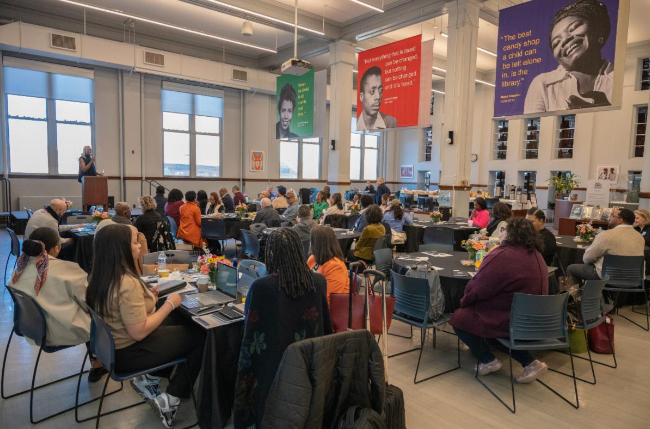
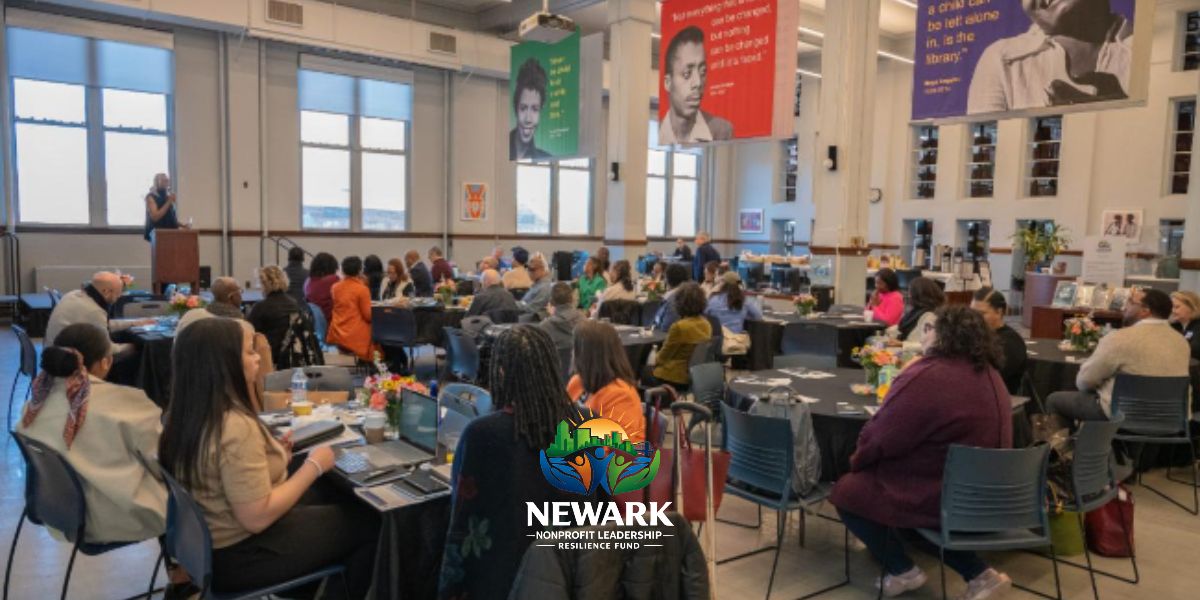
The Newark Nonprofit Leadership & Resiliency Fund (NNLRF) has released its first-year report, Built With Newark. The NNLRF was launched by Schumann Fund and four other funders, and nonprofit leaders hold the majority vote on how its money is spent. In year one, that meant $405,000 to strengthen nonprofit boards, the priority Newark leaders named first. Next up is Resilience in Practice, a three-part learning series running through June 2027.
Newark Nonprofit Leaders Help Steer a New Fund
The Newark Nonprofit Leadership & Resiliency Fund (NNLRF) released its Year One report, Built With Newark., on September 30. The report describes $405,000 in first-year investments and a governance model in which nonprofit leaders hold the majority of the votes.
Schumann Fund is one of five funders behind NNLRF. The others are the Community Foundation of New Jersey, Prudential Foundation, The Henry S. & Agnes M. Truzack Foundation, and Victoria Foundation. Willow Bees Group administers the Fund.
How it started
Work on the idea began in late 2023, and partners agreed to create a dedicated fund in March 2025. Before deciding what to fund, NNLRF asked. In March 2026, BoardSource led six listening sessions with 46 Newark nonprofit leaders, including 28 executive directors and CEOs and 18 board members.
Nonprofit leaders hold five of the nine seats on NNLRF’s Governance Committee and share authority over strategy, selection, and investment priorities. “Shared governance means nonprofit leaders are not simply being asked for input after decisions are made,” said Sharnita C. Johnson of Victoria Foundation, a committee member. “We have a role in deciding what happens next and how,” reinforced Khaatim Sherrer El, CEO of Clinton Hill Community Action and a committee member.
Year One: Boards First
Leaders said board governance should come first, and that one-time trainings weren’t enough. So NNLRF put $285,000 into a Board Transformation Community of Practice with 12 Newark nonprofits and set aside another $120,000 for implementation grants. Participants receive governance training from BoardSource, consulting and cohort learning through the Nonprofit Professionals of Color Collective, and board development through Leadership Newark.
Across the country, sustainability is on leaders’ minds. In the Center for Effective Philanthropy’s State of Nonprofits 2026 survey, 66 percent of nonprofit CEOs said they were worried about their organization’s financial stability.
What’s Next
NNLRF’s new Resilience in Practice series has three sessions:
- Financial Resilience: November 13, 2026
- People and Organizational Resilience: March 19, 2027
- Strategic Resilience and Adaptability: June 4, 2027
“Newark’s nonprofit ecosystem is comprised of leaders who live and breathe the missions of their organizations. At Schumann Fund, we proudly recognize the depth of their commitments to the city and view their work as essential to our community’s wellbeing. We are proud to invest in NNLRF because we believe Newark is rich in talent and leadership, and the strength of its nonprofit ecosystem is one of the city’s greatest assets. Supporting the long-term health and resilience of that ecosystem is an investment in Newark’s continued growth, vitality, and future,” commented Program Partner Jared Boone.
Read the Year One report, Built With Newark., and join NNLRF’s mailing list at https://nnlrf.org.
FROM THE FIELD: Now Hiring
The New Jersey Institute for Social Justice seeks a transformational leader to serve as its next President and Chief Executive Officer who will guide the Institute’s continued growth and impact. Its work is currently fueled by its four programmatic thrusts – economic justice, criminal justice, environmental justice, and law & policy; a thoughtful strategist who can balance visionary initiatives with pragmatic operational stability will suit this role well. Learn more here.
Nonprofit job listings are available using the New Jersey Center for Nonprofits searchable database on their website at https://njnonprofits.org/joblisting.
About Schumann Fund for New Jersey
Founded in 1988, Schumann Fund for New Jersey is a private foundation based in Montclair, NJ. It advances ideas and opportunities to empower low-income children, families, and communities of color to thrive. The foundation invests in non-profit organizations rooted in Essex County and statewide that work to advance racial and economic equity.